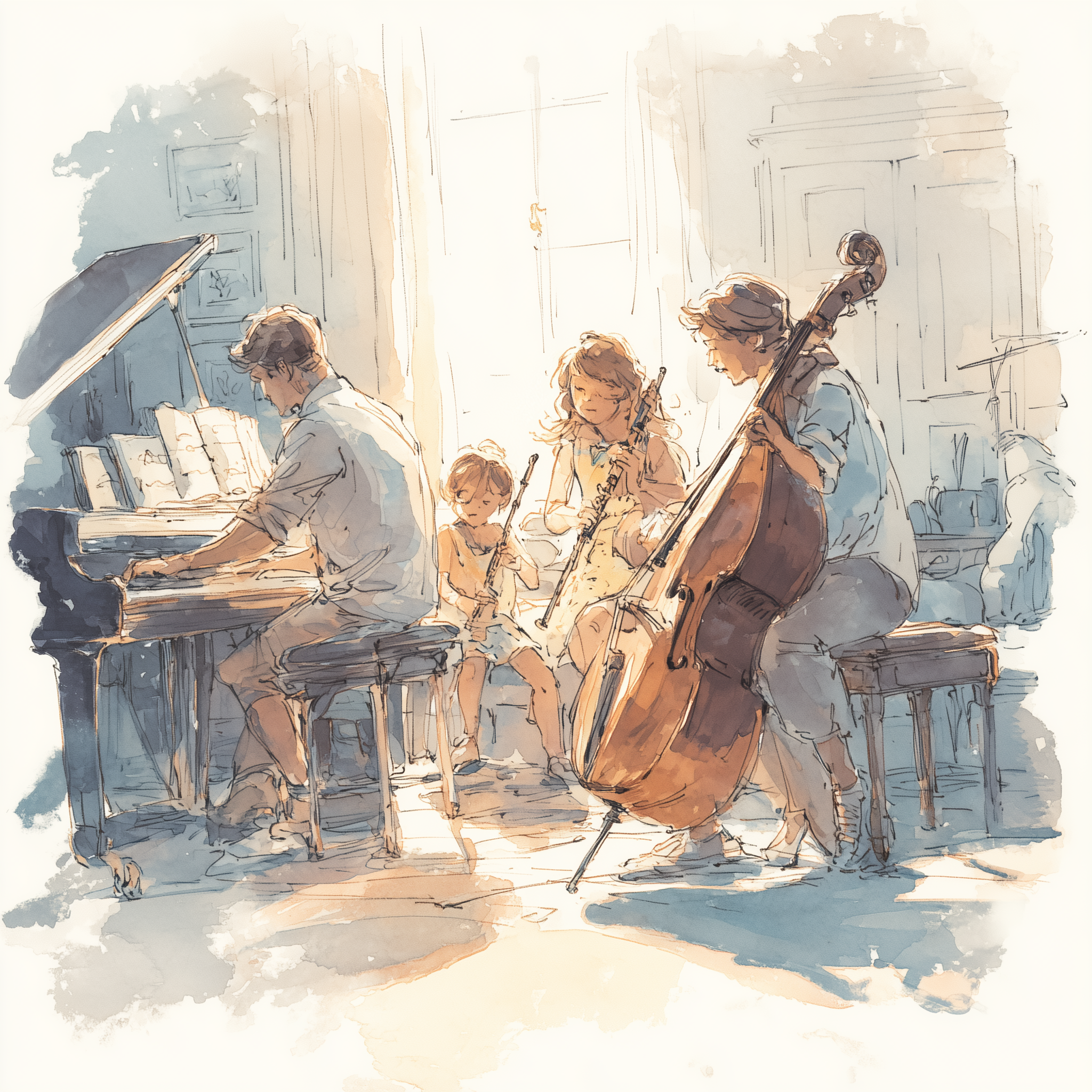
Family life today is full of devices. Even when people spend time together physically, they are often mentally somewhere else. One person answers messages, another scrolls through short videos, someone watches a series in the background, and a child moves between games and social media. Families still share the same space, but they do not always share the same experience. This is one reason why more parents are searching for activities that create real interaction instead of parallel digital routines. Family music lessons are increasingly becoming one of these alternatives.
Unlike many modern forms of entertainment, music requires participation. It asks people to listen, react, repeat, improvise and pay attention to each other. A family does not need to perform perfectly for the experience to matter. In fact, the value often comes from the opposite: mistakes, laughter, awkward beginnings and gradual improvement together.
Music Creates Active Presence
Most screen-based leisure is passive. People consume content prepared by someone else. Music works differently. Even simple musical activities create active involvement. Singing together, practicing rhythms, learning chords or repeating melodies require attention and coordination.
This changes the atmosphere inside the home. Instead of silence interrupted by notifications, there is shared sound. Instead of isolated scrolling, there is interaction. Family music lessons create moments where different generations participate in the same process at the same time.
For children, this kind of attention feels very different from ordinary instruction. A child practicing piano alone may experience music as homework. But when parents or siblings participate, the activity becomes social rather than purely educational. The emotional tone changes.
Adults also experience something unusual in these moments. Many parents spend most of their time managing schedules, solving problems and organizing routines. Music lessons temporarily remove these roles. A parent becomes a learner again, someone trying, failing, repeating and improving alongside the child.
A Response to Digital Fatigue
Digital fatigue is now a common part of everyday life. People spend hours moving between emails, streaming platforms, messaging apps and endless online content. Even leisure often happens through screens. Over time, many families begin to feel that passive digital entertainment no longer creates real rest or connection.
Music offers a different rhythm. It slows attention down while also keeping the mind engaged. Playing an instrument, singing or practicing timing requires focus, but not the fragmented type of focus created by social media. This is why many people describe music as mentally calming even when it demands concentration.
Family music lessons respond to this exhaustion naturally. They provide structure without pressure and engagement without constant digital stimulation. For some families, weekly lessons become one of the few moments where everyone disconnects from devices without feeling forced to do so.
Shared Learning Changes Family Dynamics
One of the most interesting aspects of family music education is the way it changes relationships inside the household. In most situations, parents teach children or supervise them. In music lessons, the learning process becomes more equal.
A child may learn rhythm faster than an adult. A teenager may help a parent remember chord progressions. Younger siblings may become more confident when they see adults making mistakes openly. These small moments matter because they reduce hierarchy and increase collaboration.
Music also creates emotional communication that does not rely entirely on conversation. Some children struggle to explain feelings directly. Teenagers especially may resist emotional discussions while still responding strongly to shared creative activities. Playing music together creates emotional closeness indirectly. The interaction happens through timing, listening and repetition rather than formal discussion.
This is one reason why music teachers increasingly notice that family participation changes student motivation. Children practice differently when music becomes part of family culture rather than an isolated lesson.
The Return of Home-Based Creativity
For many decades, music was naturally connected to domestic life. Families sang together, played instruments at home or gathered around shared performances. Recorded entertainment gradually replaced many of these traditions. Radio, television and later streaming services transformed people from participants into audiences.
Today, family music lessons partly represent a return to home-based creativity. Families are rediscovering that artistic activities do not need to remain professional to be meaningful. A living room performance, a shared beginner guitar session or an evening of simple singing can become more memorable than highly polished entertainment consumed passively.
This shift is especially visible among parents who want their children to experience hobbies that are not entirely digital. Music offers something tactile and physical. Fingers press keys, hands move across strings, voices change with breath and timing. The body participates fully in the activity.
At the same time, music does not completely reject technology. Many families use apps, online tutorials or digital instruments to support learning. The difference is that technology becomes a tool supporting interaction rather than replacing it.
Music as Emotional Routine
Modern families often struggle to create rituals. Daily routines are fragmented by work schedules, school demands and constant digital interruption. Shared rituals used to appear naturally around meals, weekends, religious practices or neighborhood life. Today many households feel less structured emotionally.
Family music lessons can unexpectedly become a new kind of ritual. A weekly practice session, an evening rehearsal or preparing a simple song together creates continuity. These repeated moments help families build memory through action.
Children especially remember emotional patterns more than individual conversations. They may forget specific advice from parents but remember singing together before dinner, practicing piano on Sunday afternoons or laughing through mistakes during a lesson.
These repeated experiences create emotional anchors inside family life. They provide stability in an environment where attention is constantly pulled elsewhere.
No Need for Professional Ambition
An important reason family music lessons are becoming more popular is that many participants are no longer driven by professional goals. In the past, music education was often connected to achievement, exams, competitions or performance. Today, many families approach music differently.
Parents are less interested in creating future concert musicians and more interested in creating meaningful shared experiences. The value lies in participation itself. Learning becomes part of family culture rather than a strict path toward mastery.
This removes some of the pressure traditionally associated with music education. Families can focus on enjoyment, communication and curiosity instead of perfection.
Interestingly, this relaxed approach often leads to stronger long-term engagement. Children who experience music as connection rather than obligation may continue practicing longer because the activity carries emotional meaning beyond technical skill.
A Small but Important Cultural Shift
Family music lessons may seem like a simple trend, but they reflect a broader cultural shift. Many people are beginning to question whether constant digital entertainment truly creates satisfaction. There is growing interest in activities that feel slower, more physical and more communal.
Music fits this need naturally. It combines creativity, discipline, emotion and social interaction without requiring complete disconnection from modern life. Families do not need expensive equipment or professional talent to participate. What matters most is attention shared in real time.
This is why family music lessons are becoming more than educational programs. They are evolving into a new form of screen-free leisure — one built not around consumption, but around presence, participation and shared experience.